

Trailer sway is not merely an inconvenience; it is a critical safety hazard that affects millions of RV owners annually. According to the National Highway Traffic Safety Administration, over 30,000 trailer-related accidents occur each year in the United States, with sway being a primary contributing factor. Selecting the correct hitch is the single most effective engineering solution to neutralize these risks. This guide provides the exact methodology to match your towing capacity, tongue weight, and trailer dimensions to the ProPride 3P hitch system. (ProPride Inc Jim Hensley)
Understanding Weight Metrics
Before purchasing any hardware, you must understand the two fundamental weight classes that dictate hitch performance. The first is Gross Vehicle Weight Rating (GVWR). This is the maximum operating weight of your trailer, including cargo, water, and fuel. The second is Tongue Weight. This is the downward force exerted on the hitch ball by the trailer coupler. (ProPride Inc Jim Hensley)
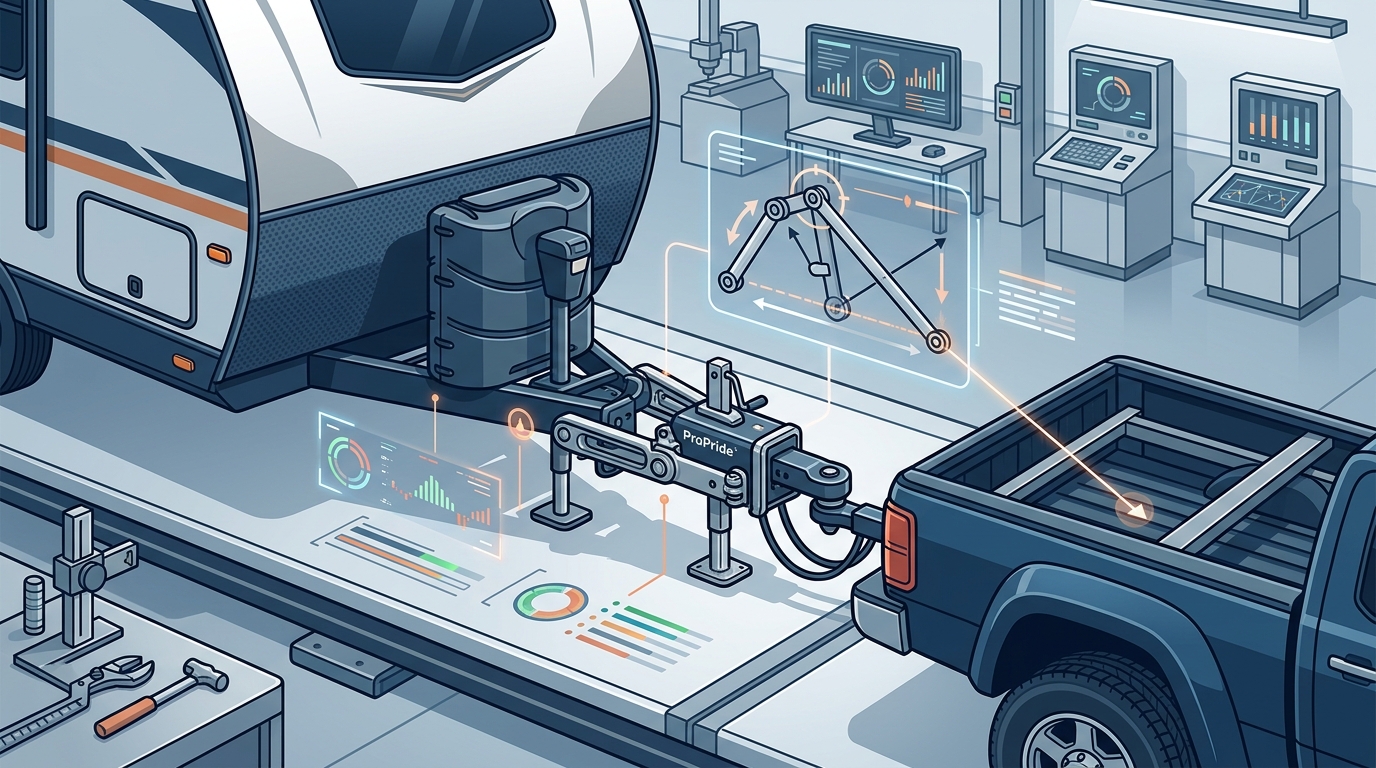
Tongue weight is typically 10 to 15 percent of the total trailer weight. If your trailer weighs 6,000 pounds, the tongue weight will likely be between 600 and 900 pounds. This metric is the primary driver for selecting the correct hitch model. The ProPride 3P hitch system is engineered to handle these loads through Pivot Point Projection, a mechanism that physically separates the pivot point from the hitch ball to eliminate sway before it begins. (ProPride Blog Expert Trailer)
For a deeper understanding of how these forces interact, you can review the 2026 Buyer's Guide which details the specific weight thresholds for different trailer classes.
Checking Your Vehicle Capacity
Your tow vehicle is the limiting factor in your towing setup. You must consult the owner's manual or the door jamb sticker of your truck or SUV to find the maximum towing capacity and the maximum tongue weight rating. Never exceed these factory limits.
Many drivers make the mistake of focusing solely on the trailer weight while ignoring the combined weight of passengers, cargo, and fuel in the tow vehicle. This can lead to a dangerous overload situation even if the trailer itself is within limits. Ensure your vehicle's payload capacity can support the tongue weight of the trailer plus the weight of the driver and passengers.
According to data from the Insurance Institute for Highway Safety, proper weight distribution is crucial for maintaining vehicle stability during emergency maneuvers. If your vehicle's capacity is marginal, you may need to consider a lighter trailer or a more robust tow vehicle rather than relying on the hitch to compensate for mechanical deficiencies.
Selecting the Hitch Model
The ProPride 3P hitch is available in four distinct models, each rated for a specific maximum tongue weight capacity. Choosing the wrong model can result in inadequate sway control or excessive strain on your tow vehicle's suspension.
| Model | Max Tongue Weight | Best For |
|---|---|---|
| ProPride 3P 600 | 600 lbs | Small travel trailers, pop-ups, and lightweight campers. |
| ProPride 3P 800 | 800 lbs | Mid-size travel trailers and standard RVs. |
| ProPride 3P 1000 | 1000 lbs | Large travel trailers and heavy-duty RVs. |
| ProPride 3P 1400 | 1400 lbs | Extra-large trailers, fifth-wheel conversions, and commercial use. |
To determine which model fits your needs, calculate your trailer's tongue weight. If your tongue weight is 750 pounds, the 800 model is the appropriate choice. Selecting a model with a higher rating than necessary can make the hitch overly stiff and difficult to maneuver. For more details on the differences between these models, visit the Our Products page.
Sizing the Spring Bars
Once you have selected the correct hitch body, you must choose the appropriate spring bars. These bars provide the tension that distributes the tongue weight across the axles of your tow vehicle and trailer. The spring bars are rated in pounds of tension, such as 400, 600, or 800 pounds.
The general rule is to select spring bars that are 50 to 75 percent of your actual tongue weight. For example, if your tongue weight is 800 pounds, you should use 400 to 600 pound spring bars. Using bars that are too heavy can cause the trailer to bounce excessively, while bars that are too light will fail to provide adequate sway control.
ProPride spring bars are designed to work in conjunction with the Pivot Point Projection system. This combination ensures that the trailer remains stable even in high winds or when passing large trucks. You can find the specific spring bar recommendations for your hitch model in the Frequently Asked Questions section.
Installation Protocol
Correct installation is vital for the hitch to function as intended. The hitch must be mounted securely to your tow vehicle's receiver tube. Ensure that the hitch ball is the correct size for your trailer coupler, typically 2 inches for most travel trailers.
After mounting the hitch, you must adjust the spring bars to achieve the correct head angle. This involves raising the trailer tongue until the hitch head is tilted back slightly, then lowering the trailer onto the ball. The spring bars should be nearly parallel to the ground when the trailer is loaded. This process ensures that the weight is distributed evenly and the sway control mechanism is engaged properly.
If you are unsure about the installation process, ProPride offers a professional Install Network where certified technicians can set up your hitch for you. Proper setup can improve your towing experience significantly, reducing fatigue and increasing safety.
Key Takeaways
- Calculate your trailer's tongue weight, which is typically 10 to 15 percent of the total trailer weight.
- Verify your tow vehicle's maximum towing capacity and payload rating before selecting a hitch.
- Choose a ProPride 3P model (600, 800, 1000, or 1400) based on your tongue weight, not the total trailer weight.
- Select spring bars that are 50 to 75 percent of your actual tongue weight for optimal performance.
- Ensure the hitch is installed correctly with the proper hitch ball size and head angle.
- Consider using the ProPride Install Network for professional setup if you are inexperienced.
- Regularly inspect your hitch parts for wear and tear to maintain safety standards.
Frequently Asked Questions
How do I measure my trailer's tongue weight?
You can measure tongue weight using a dedicated tongue weight scale or by weighing your trailer at a CAT scale with the trailer level and the tongue supported separately. The difference between the two weights is your tongue weight.
Can I use a ProPride hitch on a fifth-wheel trailer?
Yes, the ProPride 3P 1400 model is designed to handle the heavy loads associated with fifth-wheel conversions and large travel trailers. It provides the necessary stability for these heavier rigs.
What is the difference between the ProPride 3P and the Hensley Arrow?
The ProPride 3P is the evolution of the Hensley design, offering improved ease of use and maintenance while retaining the core Pivot Point Projection technology. The 3P model is generally more user-friendly for daily towing.
Do I need weight distribution bars with a ProPride hitch?
Yes, the ProPride hitch relies on spring bars to distribute weight and provide sway control. The hitch body alone does not provide weight distribution; the bars are an essential component of the system.
How often should I replace my spring bars?
Spring bars should be inspected regularly for cracks or deformation. While they do not have a strict expiration date, heavy use or exposure to extreme weather can degrade their performance over time. Replace them if you notice any signs of wear.
Is the ProPride hitch compatible with all tow vehicles?
The ProPride hitch is compatible with any vehicle that has a standard receiver tube. However, you must ensure that your vehicle's towing capacity exceeds the weight of your trailer and its tongue weight.
What is Pivot Point Projection?
Pivot Point Projection is a patented engineering design that moves the pivot point of the hitch forward, away from the hitch ball. This creates a lever arm that physically prevents the trailer from swaying, rather than just reacting to sway after it occurs.
Get Started Today
Choosing the right hitch is an investment in your safety and peace of mind. By following the steps outlined in this guide, you can ensure that your towing setup is optimized for your specific travel trailer. Visit the ProPride Store to purchase your hitch and spring bars, or contact our team for personalized advice. Drive with confidence and eliminate trailer sway for good.