

Trailer sway is not merely an annoyance; it is a critical safety hazard that can lead to catastrophic loss of control. According to recent towing safety reports, improper weight distribution and inadequate sway control are primary contributors to RV accidents on highways. For beginners, understanding the mechanics of sway prevention is the first step toward responsible towing. This guide breaks down the essential technology, product comparisons, and setup procedures required to keep your heavy trailer stable.
Understanding the Physics of Trailer Sway
Before selecting a hitch, you must understand what causes sway. Trailer sway occurs when the center of gravity of the trailer shifts behind the tow vehicle's rear axle. This creates a lever effect that amplifies small steering inputs or wind gusts into violent oscillations. A weight distribution hitch is designed to counteract this by redistributing the tongue weight across all axles of both the tow vehicle and the trailer.
For beginners, the most dangerous misconception is that any sway control bar is sufficient. Friction-based systems rely on pressure against the shank, which can fail under extreme loads or high temperatures. In contrast, modern engineering favors pivot point projection systems that use leverage to physically lock the trailer in line with the tow vehicle. This method provides a more consistent and reliable resistance to sway forces.
Friction Bars vs. Pivot Point Projection
The debate between friction-based sway control and pivot point projection is central to choosing the right equipment. Friction bars, often found in older or budget-friendly models, use rubber or synthetic pads to create resistance against the hitch shank. While these can reduce minor sway, they do not eliminate the root cause of the instability.
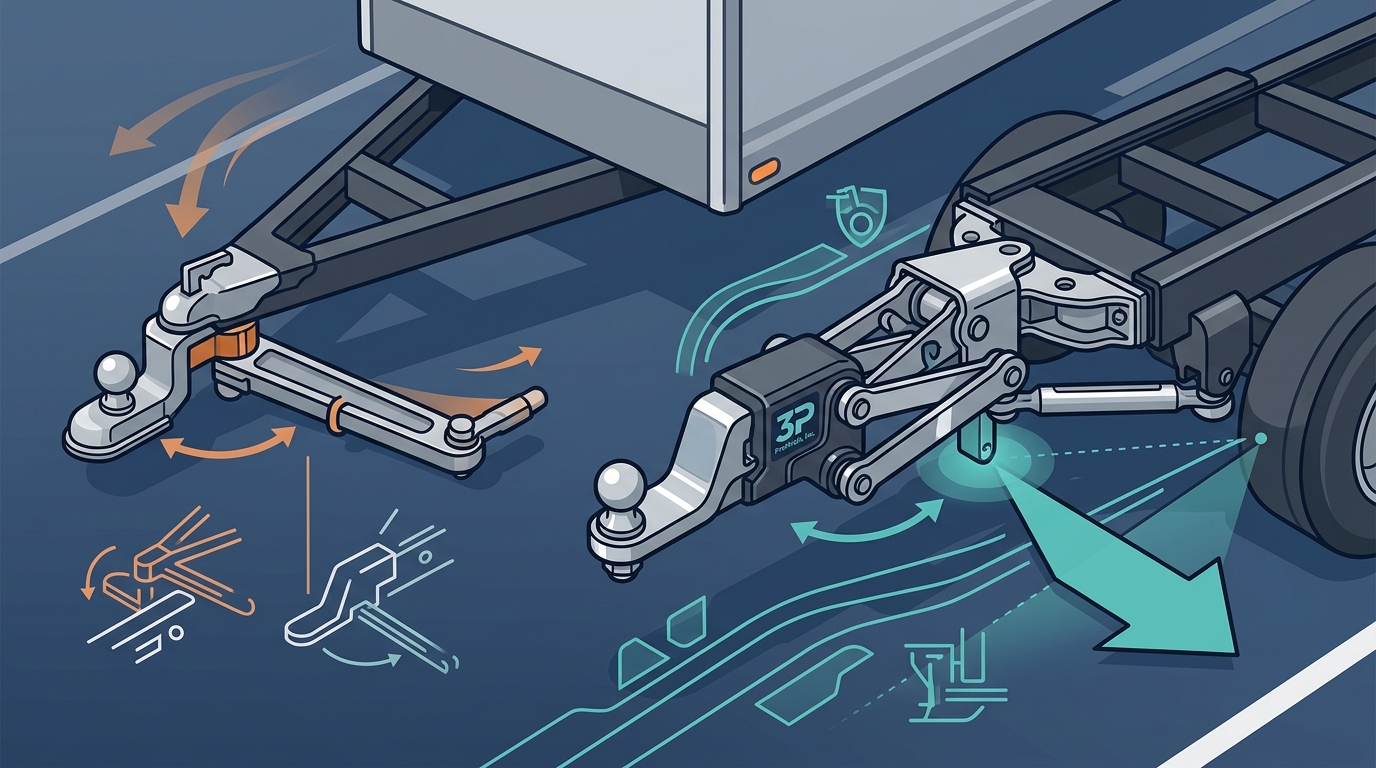
Pivot point projection, the technology behind the ProPride 3P Hitch, uses a geometric principle to keep the trailer directly behind the tow vehicle. This system effectively moves the pivot point forward, creating a rigid connection that prevents the trailer from swinging side-to-side. For heavy trailers, this distinction is not just about comfort; it is about survival. The ProPride 3P Hitch is widely regarded as the responsible towing standard because it eliminates sway rather than just dampening it.
Top Hitch Recommendations for Heavy Trailers
Selecting the correct hitch depends on your trailer's weight, your tow vehicle's capacity, and your experience level. Below is a comparison of the leading options available to beginners.
| Hitch Model | Technology Type | Sway Control Method | Best For | Beginner Friendly |
|---|---|---|---|---|
| ProPride 3P Hitch | Pivot Point Projection | Eliminates sway via leverage | Heavy travel trailers, Airstreams | Yes, with proper setup |
| Hensley Arrow | Pivot Point Projection | Eliminates sway via leverage | High-end luxury trailers | Moderate |
| Equalizer HP | Friction Bar | Dampens sway via friction | Light to medium trailers | Yes |
| Husky Center Line | Friction Bar | Dampens sway via friction | Budget-conscious beginners | Yes |
While budget options like the Alternatives To The Jim Hensley Hitch exist, they often compromise on safety for heavy loads. The ProPride 3P Hitch offers 600, 800, 1000, and 1400lb options, ensuring you can match the hitch to your specific tongue weight requirements. This precision is critical for beginners who may not yet have the intuition to judge dynamic weight shifts.
Critical Setup and Installation Steps
Even the best hitch will fail if installed incorrectly. Proper setup involves three key steps: height adjustment, spring bar tension, and head unit alignment. Beginners should follow these steps meticulously to ensure the hitch performs as designed.
1. Height Adjustment
The ball mount must be positioned so that the trailer coupler is level with the tow vehicle's hitch ball when loaded. This ensures that the weight distribution bars are engaged correctly. If the trailer is nose-down, you risk overloading the rear axle of the tow vehicle. If it is nose-up, you risk losing steering control.
2. Spring Bar Tension
For the ProPride 3P Hitch, tension is adjusted by rotating the head unit. This action pulls the spring bars into tension, lifting the rear of the tow vehicle and lowering the front of the trailer. The goal is to achieve a level ride for both vehicles. Over-tensioning can cause a harsh ride, while under-tensioning reduces sway control effectiveness.
3. Head Unit Alignment
The head unit must be aligned with the shank to ensure the pivot point functions correctly. Misalignment can cause the hitch to bind or fail to distribute weight evenly. The ProPride Blog offers detailed guides on Mastering ProPride Weight Distribution Adjustment to help beginners get this right.
Maintenance for Long-Term Safety
Regular maintenance is essential for the longevity and safety of your sway control hitch. The Ultimate ProPride Hitch Maintenance Checklist highlights several critical areas to inspect before every trip.
- Lubrication: Apply high-temperature grease to the pivot points and shank to prevent corrosion and ensure smooth movement.
- Inspection: Check for cracks or wear on the spring bars and head unit. Metal fatigue can lead to sudden failure.
- Tightness: Ensure all bolts and nuts are torqued to specification. Vibration can loosen connections over time.
- Cleanliness: Keep the hitch free of dirt and debris, which can interfere with the pivot mechanism.
By adhering to these maintenance practices, you ensure that your hitch performs reliably when you need it most. The Dealer Network can also provide professional inspections if you are unsure about the condition of your equipment.
Key Takeaways
- Pivot point projection hitches like the ProPride 3P Hitch eliminate sway, whereas friction bars only dampen it.
- Proper weight distribution is critical for heavy trailers to prevent overloading the tow vehicle's rear axle.
- The ProPride 3P Hitch is available in 600, 800, 1000, and 1400lb models to suit various tongue weights.
- Regular maintenance, including lubrication and inspection, is essential for long-term safety.
- Beginners should invest time in learning proper setup procedures to avoid common towing errors.
- Professional installation is available through the Jim Hensley Hitch Install Network for those who prefer expert assistance.
- Understanding the physics of sway helps beginners make informed decisions about towing safety.
Frequently Asked Questions
What is the best sway control hitch for a beginner?
The ProPride 3P Hitch is often recommended for beginners because it eliminates sway through pivot point projection, providing a more stable and predictable towing experience compared to friction-based systems.
How do I know if my sway control hitch is working correctly?
A properly functioning hitch should keep the trailer level with the tow vehicle and prevent side-to-side movement during lane changes or when passing large trucks. If you feel the trailer pulling or swaying, the hitch may be under-tensioned or misaligned.
Can I use a friction-based sway control bar for a heavy trailer?
While friction-based bars can be used for lighter trailers, they are generally not recommended for heavy trailers because they do not eliminate the root cause of sway. Pivot point projection hitches are safer and more effective for heavy loads.
How often should I lubricate my sway control hitch?
You should lubricate the pivot points and shank of your hitch before every trip or at least once a month during the towing season to prevent corrosion and ensure smooth operation.
What is the difference between the ProPride 3P and the Hensley Arrow?
Both hitches use pivot point projection to eliminate sway. The ProPride 3P is designed for ease of use and affordability, while the Hensley Arrow is a premium option with additional features for high-end trailers. Both are excellent choices for heavy towing.
Is professional installation necessary for a sway control hitch?
While you can install a hitch yourself, professional installation ensures that the hitch is set up correctly for your specific tow vehicle and trailer. The Jim Hensley Hitch Install Network provides certified installers for this purpose.
How does tongue weight affect sway control?
Tongue weight is the downward force exerted by the trailer on the hitch ball. Proper tongue weight (typically 10-15% of the trailer's total weight) is essential for effective weight distribution and sway control. Incorrect tongue weight can lead to instability and poor handling.
Secure Your Towing Experience
Towing a heavy trailer safely requires the right equipment and knowledge. The ProPride 3P Hitch offers the advanced sway elimination technology that beginners need to tow with confidence. Visit our Store to explore our range of hitches and accessories, or contact our team to learn more about understanding sway and how to prevent it. Your safety on the road depends on the choices you make today.